How to Attract Hummingbirds in the Deep South: A Complete Guide
Few things rival the moment a hummingbird hovers six feet from your face, sizing you up before deciding whether your feeder is worth its time. In the Deep South, we’re luckier than most — our long warm season means hummingbirds visit from early spring through late fall, and in parts of Texas and the Gulf Coast, some species stay all winter.
But attracting hummingbirds takes more than hanging a red feeder. Here’s how to do it right.
Know Your Southern Hummingbirds
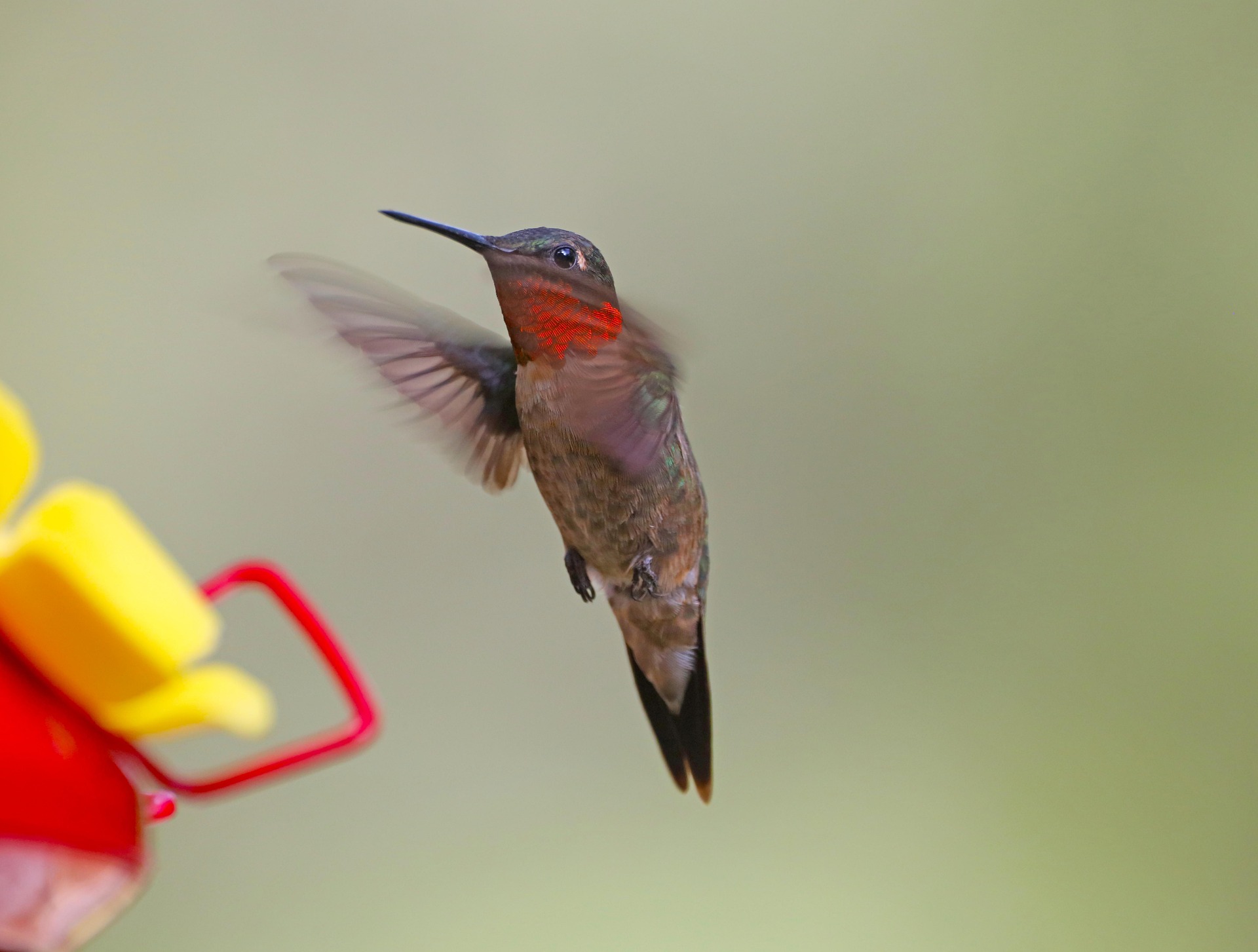
The ruby-throated hummingbird is the only species that breeds in the eastern half of the South. Males have an iridescent ruby throat that flashes black or red depending on the angle. Females are green above and white below with no throat patch.
In Texas, you’ll also see black-chinned hummingbirds breeding in the western half of the state. And during winter — yes, winter — the Gulf Coast hosts an extraordinary variety of rare hummingbirds blown off-course from the West: rufous, calliope, broad-tailed, Anna’s, and others. Leaving feeders up through winter in the Deep South can produce remarkable sightings.
When to Put Your Feeders Out
Timing matters. Hummingbirds remember feeder locations from previous years and return on schedule.
- Florida & South Texas: Mid-February
- Louisiana, Mississippi, Alabama, Georgia, South Carolina: First week of March
- North Texas, Arkansas, Tennessee: Mid-March to early April
A good rule: have feeders up two weeks before you expect to see your first bird. Early scouts are looking for reliable food sources, and they’ll remember yours.
When to Take Feeders Down
Here’s where Southern birding wisdom differs from what Northern guides will tell you.
Old advice: “Take feeders down in fall so birds know to migrate.”
Actual science: Hummingbirds migrate based on daylight, not food availability. Leaving feeders up doesn’t keep them from migrating — but it does help late stragglers and exhausted migrants refuel.
In the Deep South, keep at least one feeder up through December. You may attract a rare western vagrant. Many Gulf Coast birders report their best hummingbird sightings in November and December.
The Right Nectar Recipe
Skip the store-bought red nectar. It’s overpriced and the red dye is unnecessary (some research suggests it may even harm hummingbirds). Make your own:
The 4:1 Recipe
- 4 parts water
- 1 part plain white sugar
That’s it. No honey (ferments and grows fungus), no brown sugar (contains iron that’s toxic to hummingbirds), no organic or raw sugar (contains too much iron), no red dye (unnecessary and possibly harmful).
How to make it:
- Bring water to a boil
- Remove from heat, add sugar, stir until dissolved
- Cool completely before filling feeders
- Store extra in the fridge for up to two weeks
Boiling isn’t strictly necessary — it just slows fermentation and dissolves sugar faster. Some Southern birders skip it entirely.
The Critical Refresh Schedule
This is where most Southern hummingbird hosts go wrong. Nectar spoils fast in our heat, and spoiled nectar can kill hummingbirds.
Refresh schedule by temperature:
- Below 70°F: every 5-7 days
- 70-80°F: every 3-4 days
- 80-90°F: every 2-3 days
- Above 90°F: every 1-2 days, no exceptions
If you see cloudy nectar, black spots, or mold inside the feeder — empty it immediately and clean it thoroughly.
For most of the Deep South in summer, that means changing nectar every 2 days. Don’t fill the feeder all the way; smaller amounts get consumed before they spoil.
Cleaning the Feeder
A dirty feeder is worse than no feeder. Every refill, you should:
- Empty old nectar completely
- Rinse with hot water
- Scrub with a bottle brush — pay extra attention to the feeding ports
- Avoid soap. Soap residue is hard to rinse out and can deter hummingbirds. Use white vinegar instead — a 1:4 vinegar-to-water rinse handles mold.
- Rinse thoroughly and refill
Once a month, do a deeper clean: soak parts in a 1:10 bleach-to-water solution for 10 minutes, rinse extremely thoroughly, and air dry before refilling.
Choosing the Right Feeder
For Southern conditions, look for these features:
- Glass over plastic — plastic feeders warp and discolor in Gulf Coast summers
- Easy to disassemble — if it’s hard to clean, you won’t clean it enough
- Built-in ant moats — Southern fire ants will swarm an unprotected feeder
- Bee guards over feeding ports — wasps and yellow jackets are persistent here
- Multiple ports — more visitors at once, especially during migration
Two reliable options:
HummZinger HighView — Saucer-style feeder with built-in ant moat. Easy to clean. Holds the right amount of nectar for 2-day refills.
Aspects HummZinger Excel — Larger version of above. Good for migration peaks when you’ll have a dozen birds working a feeder at once.
Feeder Placement
Place feeders:
- In partial shade — direct Southern sun spoils nectar in hours
- Near cover (a tree or shrub within 10-15 feet) — gives birds a safe perch between visits
- Visible from a window — for your enjoyment
- At least 4 feet from the ground — keeps cats from ambushing
- Multiple feeders, spread apart — one dominant male will guard a single feeder. Two feeders out of sight of each other allow more birds to feed peacefully.
Beyond the Feeder: Plants That Attract Hummingbirds
Feeders bring hummingbirds in, but the right plants keep them around. The best hummingbird plants for Southern yards:
- Trumpet creeper — native, drought-tolerant, hummingbird magnet
- Cardinal flower — moisture-loving, bright red, blooms summer-fall
- Salvia (especially ‘Black and Blue’ and pineapple sage) — long bloom period, heat-tolerant
- Bee balm (Monarda) — drought-tolerant once established
- Coral honeysuckle — native, blooms spring through fall, doesn’t become invasive like Japanese honeysuckle
- Turk’s cap — Texas native, blooms in shade where little else does
- Firebush — Florida and Gulf Coast favorite, blooms until frost
Plant in clumps rather than singles — clusters of red and orange flowers are more visible to passing hummingbirds.
The Fire Ant Problem
Southern hummingbird hosts face a uniquely brutal pest: fire ants. They’ll swarm a feeder within hours, drowning in the nectar and contaminating it.
Solutions:
- Ant moats — small water-filled cups above the feeder. Ants can’t cross water. Refill in dry weather.
- Apply Vaseline to the hanging wire—ants get stuck. Reapply weekly.
- Avoid insecticides—anything you spray on or near a feeder risks poisoning birds
The Bottom Line
Getting hummingbirds to your Southern yard is straightforward: feeders up by early March, clean nectar refreshed every 2-3 days, partial shade with cover nearby, and plants that bloom red and tubular.
The harder part is keeping them coming back. The yards that hummingbirds adopt as territory year after year are the yards where nectar never spoils, feeders are always clean, and the gardener has planted hummingbird favorites alongside the feeder.
Do that, and within two seasons, your Deep South backyard will be a hummingbird highway from March through Christmas.