Top 10 Backyard Birds of the Deep South: A Visual Identification Guide
The Deep South is one of the richest birding regions in North America. Our mild winters keep songbirds present year-round, our position along the Gulf Coast creates a migration highway each spring and fall, and our mix of pine forests, hardwood bottoms, and coastal marshes supports an extraordinary variety of species.
If you’ve just hung your first feeder in Texas, Louisiana, Mississippi, Alabama, Georgia, Florida, or South Carolina, these are the ten birds you’re most likely to see—and how to tell them apart at a glance.
1. Northern Cardinal
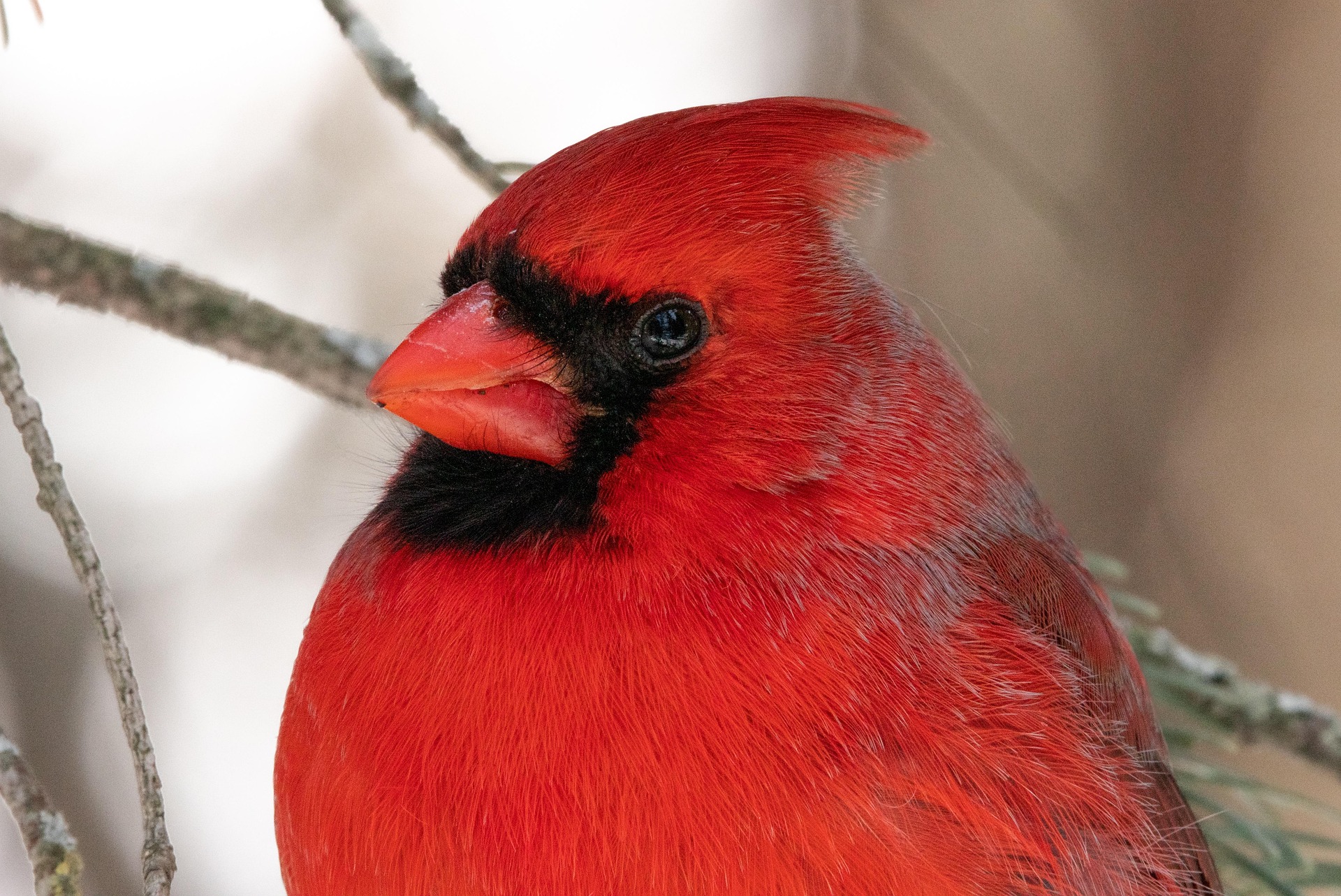
Look for: The male is unmistakable—brilliant red all over with a black mask around a bright orange beak and a tall crest. Females are a soft buff-brown with red highlights on the wings, tail, and crest.
You’ll see them: Year-round, in every Southern state, in every backyard with cover nearby. Cardinals are non-migratory and territorial, so the pair you see in January is likely the same pair you’ll see in July.
Favorite foods: Black oil sunflower seeds, safflower seeds, peanuts. They prefer larger perches or platform feeders—they’re too big for clinging finch feeders.
2. Carolina Wren
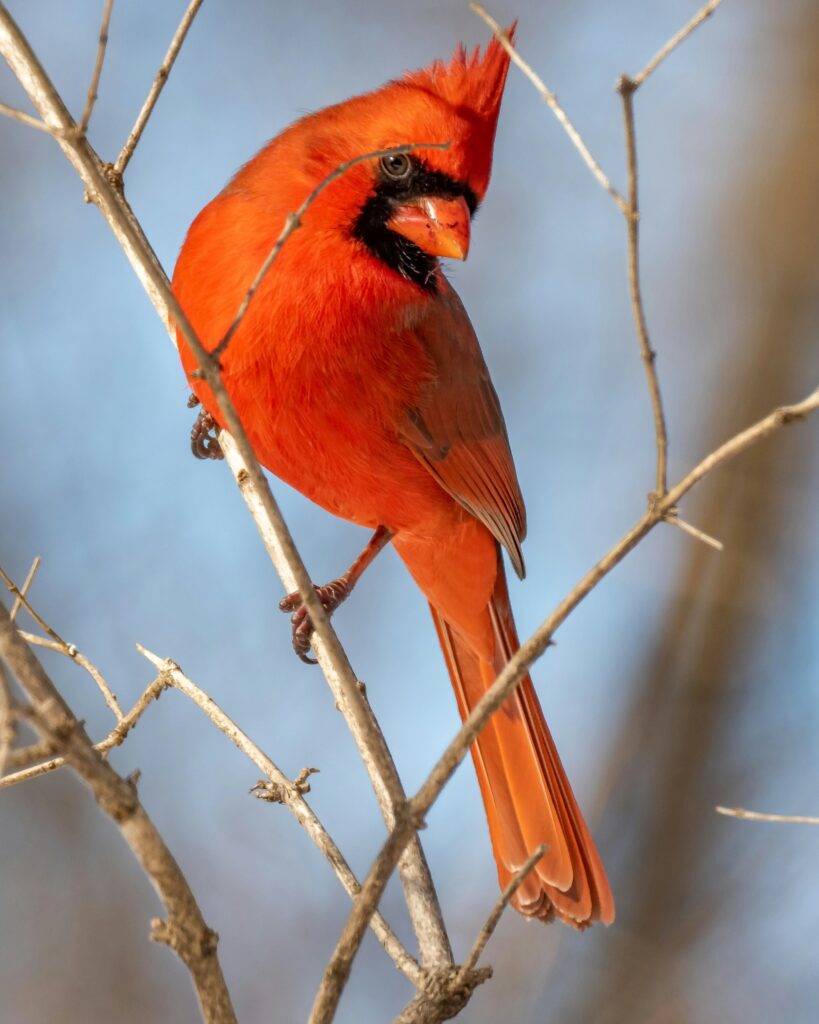
Look for: A small, plump, reddish-brown bird with a bold white eyebrow stripe and an upturned tail. Far louder than its size suggests—a single Carolina wren can fill a yard with song.
You’ll see them: Year-round across the Deep South, especially in yards with brush piles, dense shrubs, or wooded edges. They’ll even nest in flowerpots, mailboxes, and grill covers.
Favorite foods: Suet, mealworms, peanut butter, shelled peanuts. Less interested in seed than most yard birds.
3. Carolina Chickadee
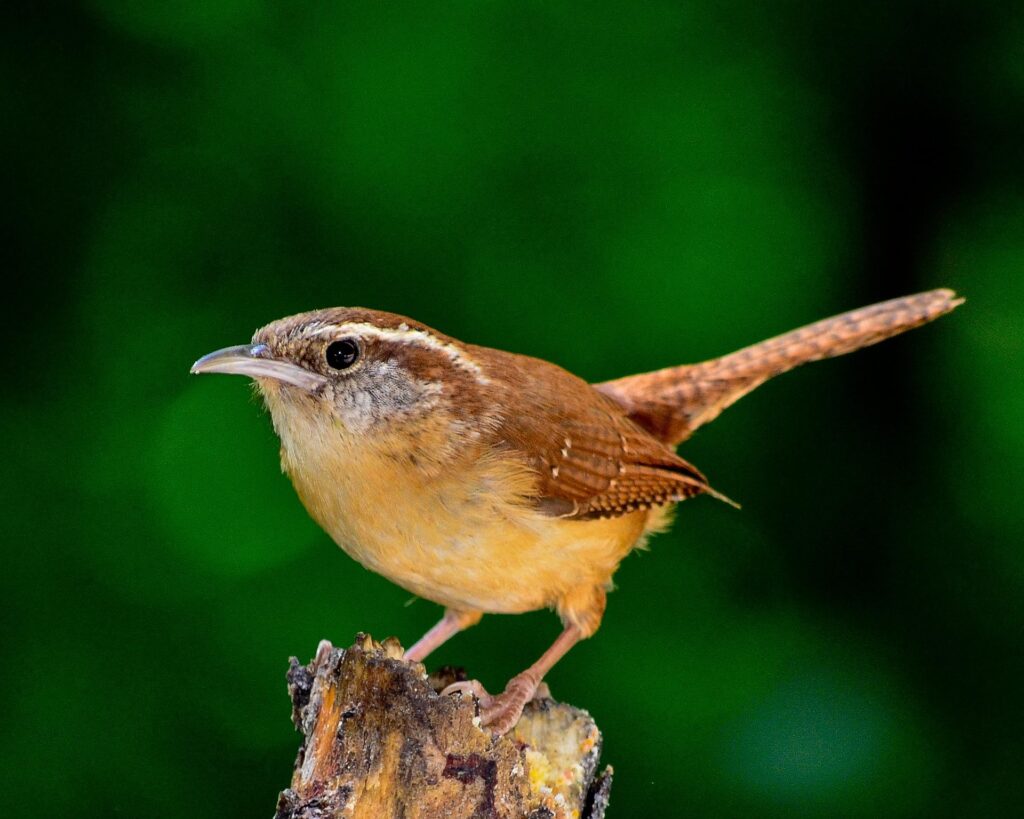
Look for: Tiny gray bird with a black cap, black throat patch (“bib”), and white cheeks. The Southern counterpart to the Northern black-capped chickadee—you almost never see both in the same yard.
You’ll see them: Year-round throughout the South. Often the first bird to discover a new feeder. They take one seed at a time, fly to a nearby branch, crack it open, and return.
Favorite foods: Black oil sunflower seeds, suet, peanuts.
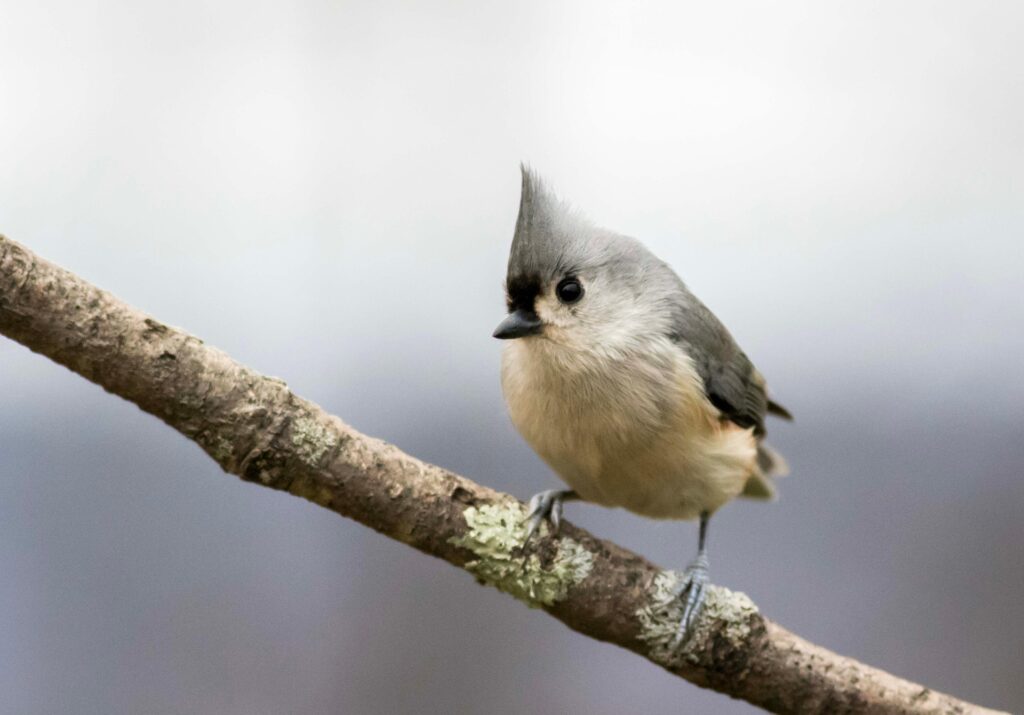
4. Tufted Titmouse
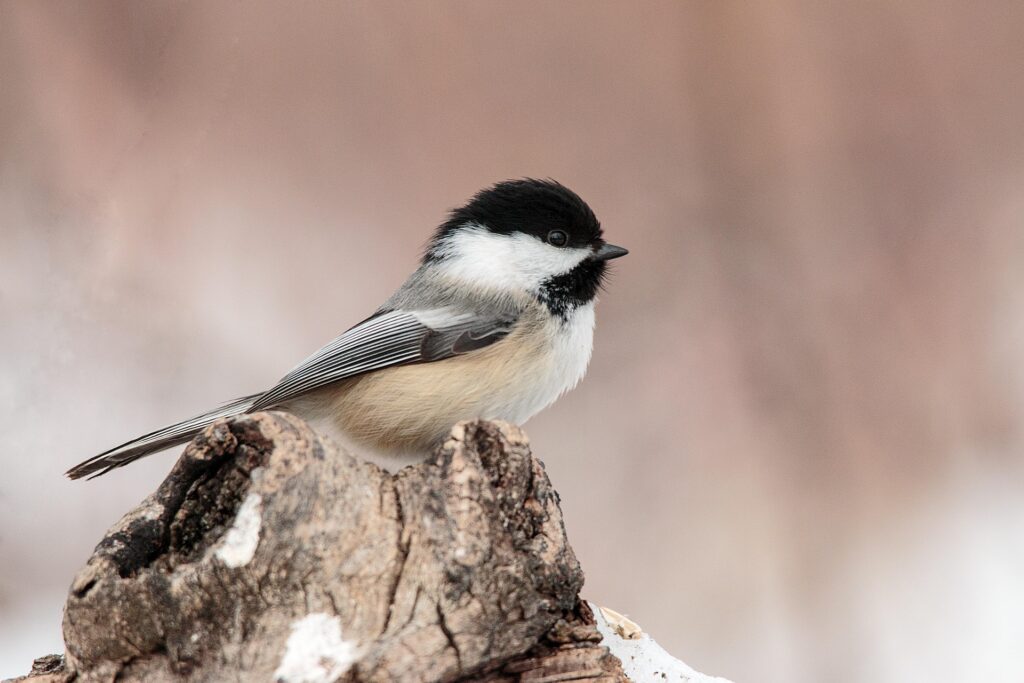
Look for: Pale gray above, white below, with a peach wash on the flanks and a distinctive pointed crest. Big dark eyes give them a wide-awake expression.
You’ll see them: Year-round across the South. They travel in small flocks, often mixed with chickadees and nuthatches.
Favorite foods: Sunflower seeds, peanuts, suet. Like chickadees, they grab and go.
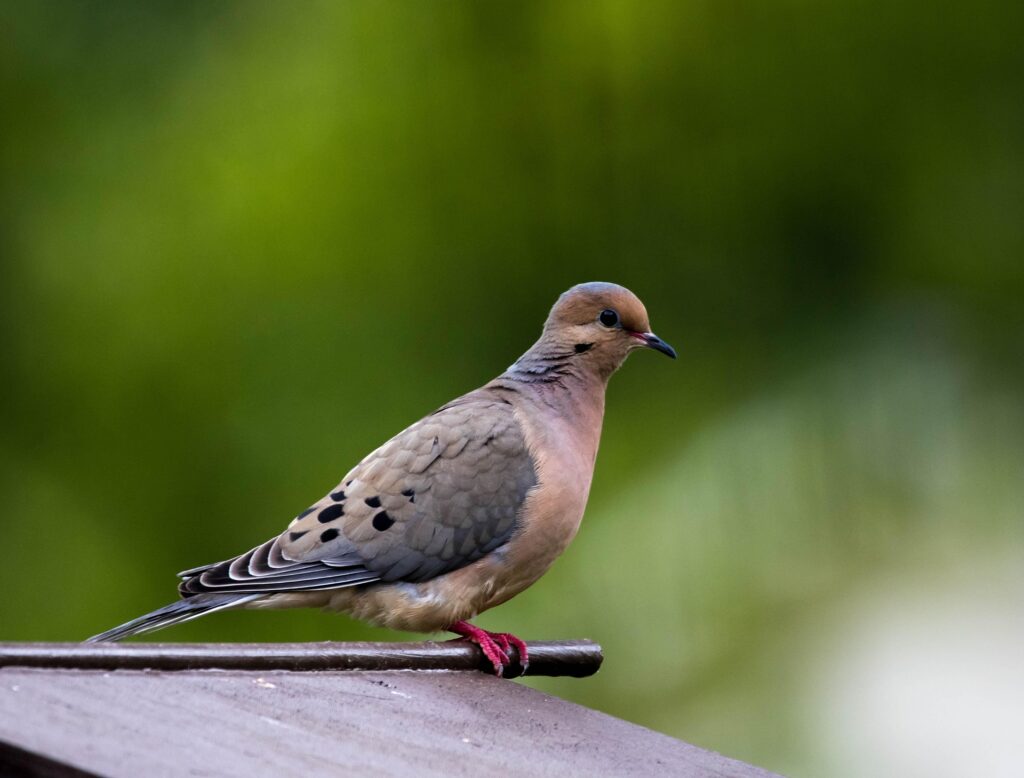
5. Mourning Dove
Look for: A slender, soft-brown dove with a small head, long tapered tail, and black spots on the wings. Their wings whistle when they take off—a sound every Southern backyard birder knows.
You’ll see them: Year-round and abundant. They prefer to feed on the ground or on platform feeders.
Favorite foods: Millet, cracked corn, milo, sunflower hearts. They love spilled seed beneath hanging feeders.
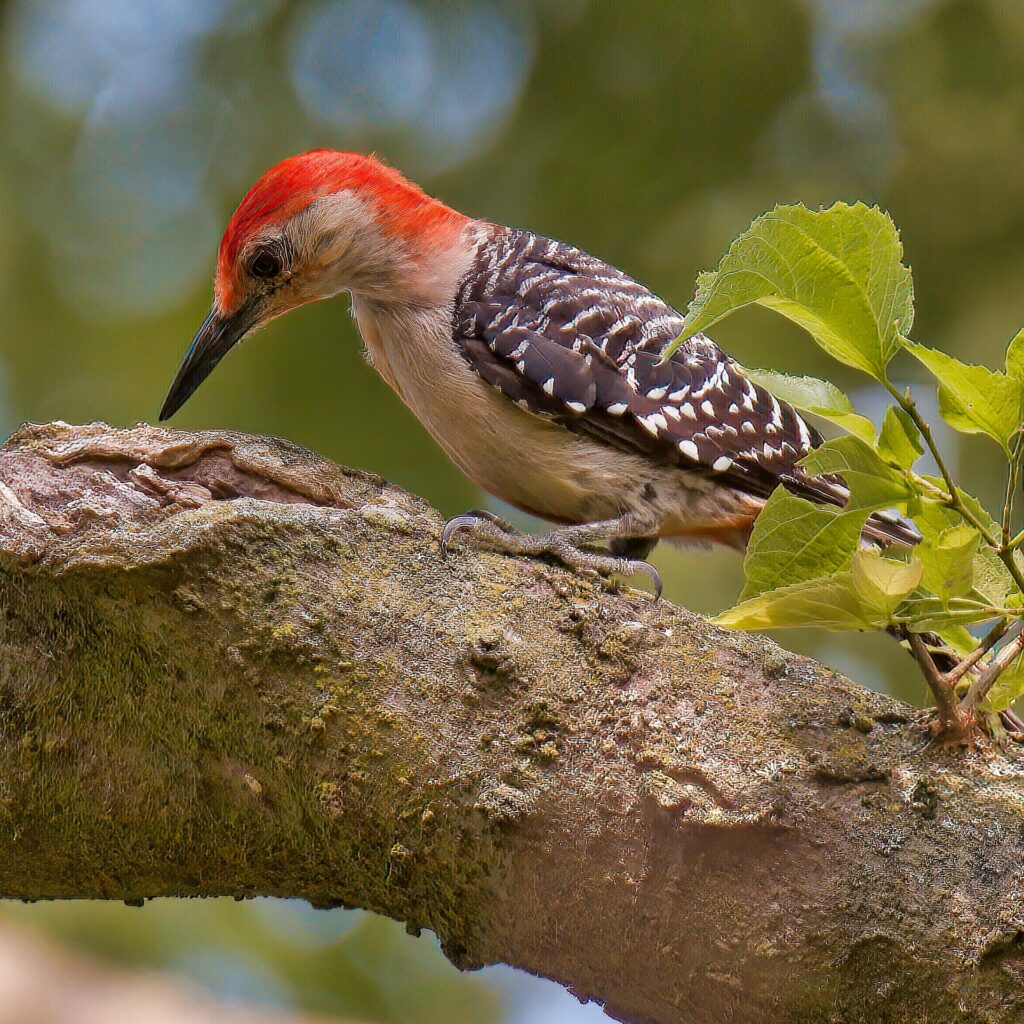
6. Red-Bellied Woodpecker
Look for: Medium-sized woodpecker with a zebra-striped back and a bright red cap (full cap on males, partial on females). The “red belly” is actually a faint pink wash that’s hard to see.
You’ll see them: Year-round across the South, especially near mature trees. They’re noisy—listen for a rolling “churr” call.
Favorite foods: Suet, peanuts, sunflower seeds, occasionally fruit. They prefer feeders with a stable platform or those designed for clinging birds.
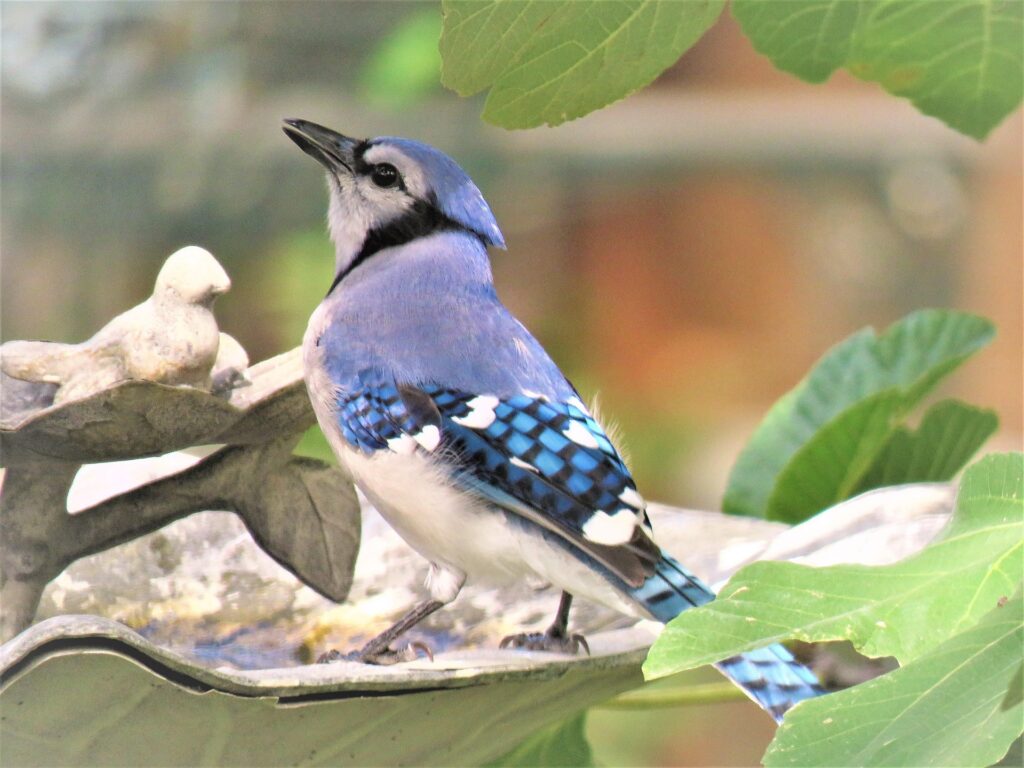
7. Blue Jay
Look for: Large, brilliant blue bird with a crest, black necklace, and white face. Loud and confident — they often announce themselves before you see them.
You’ll see them: Year-round throughout the South. They can dominate feeders and scare off smaller birds, but they’re also excellent sentinels—they call out hawks and snakes.
Favorite foods: Peanuts (in the shell especially), sunflower seeds, corn, suet.
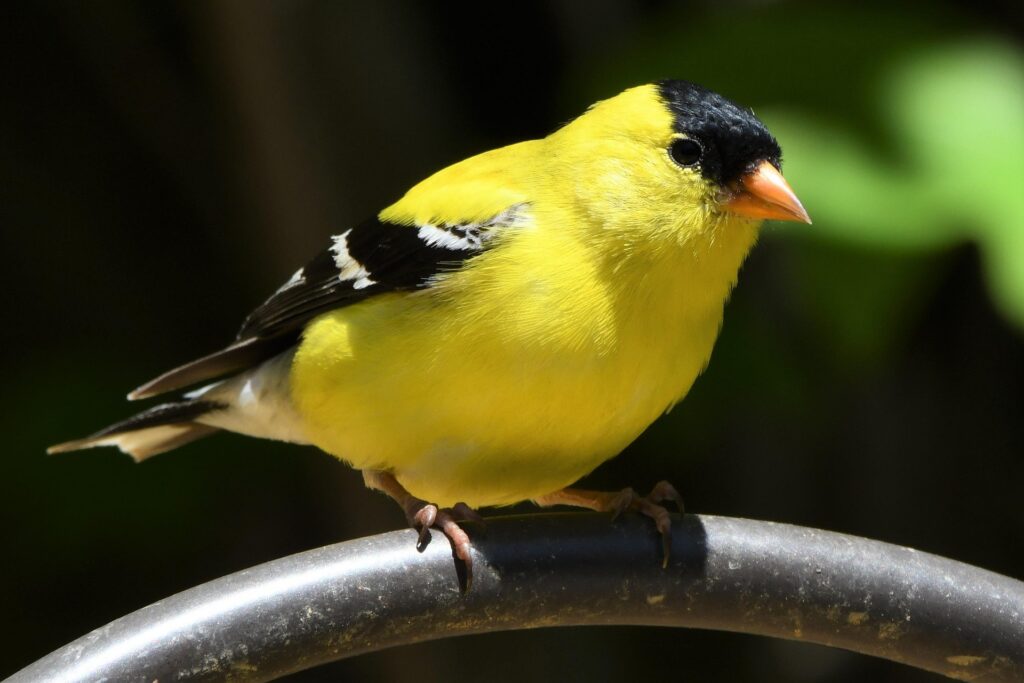
8. American Goldfinch
Look for: Small finch. In summer, males are brilliant lemon-yellow with black wings and a black forehead. In winter, both sexes fade to a drab olive-buff—many Southerners think they’ve left when they’ve just changed clothes.
You’ll see them: Year-round in most of the South, though numbers swell in winter as northern birds move south. They love thistle feeders.
Favorite foods: Nyjer (thistle) seed, sunflower hearts. They cling and feed acrobatically.
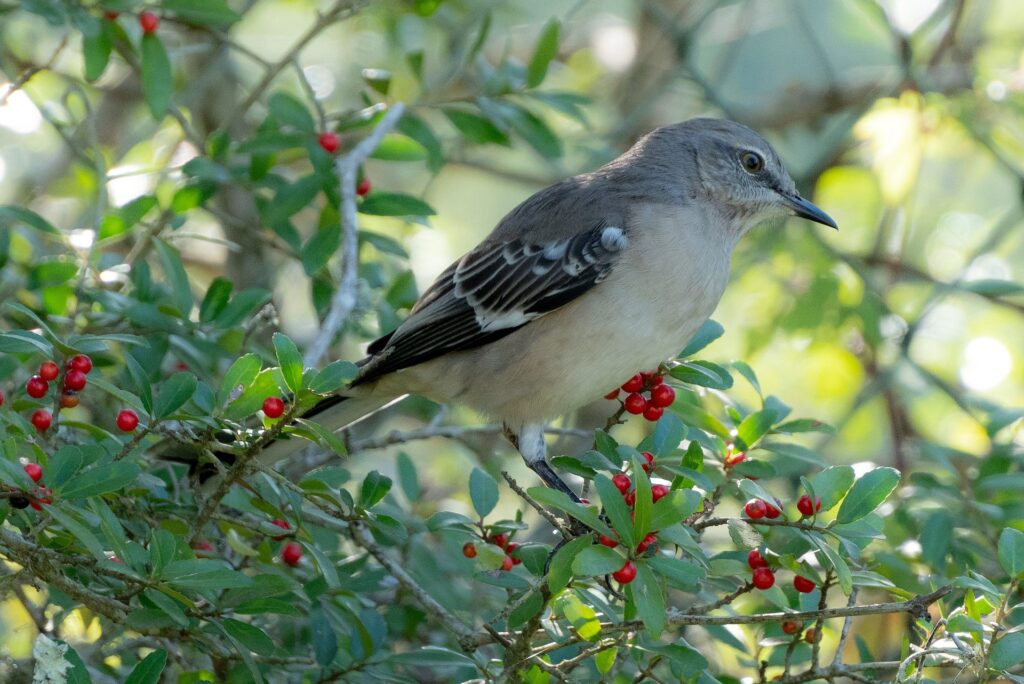
9. Northern Mockingbird
Look for: Slender gray bird with long tail, white wing patches that flash in flight, and pale yellow eyes. The state bird of five Southern states (TX, MS, AR, FL, TN) for good reason.
You’ll see them: Year-round in yards with open lawn and scattered shrubs. They mimic dozens of other birds — and cell phones, car alarms, and squeaky gates.
Favorite foods: Less of a seed eater. They love suet, mealworms, raisins, and fruit (orange halves work great).
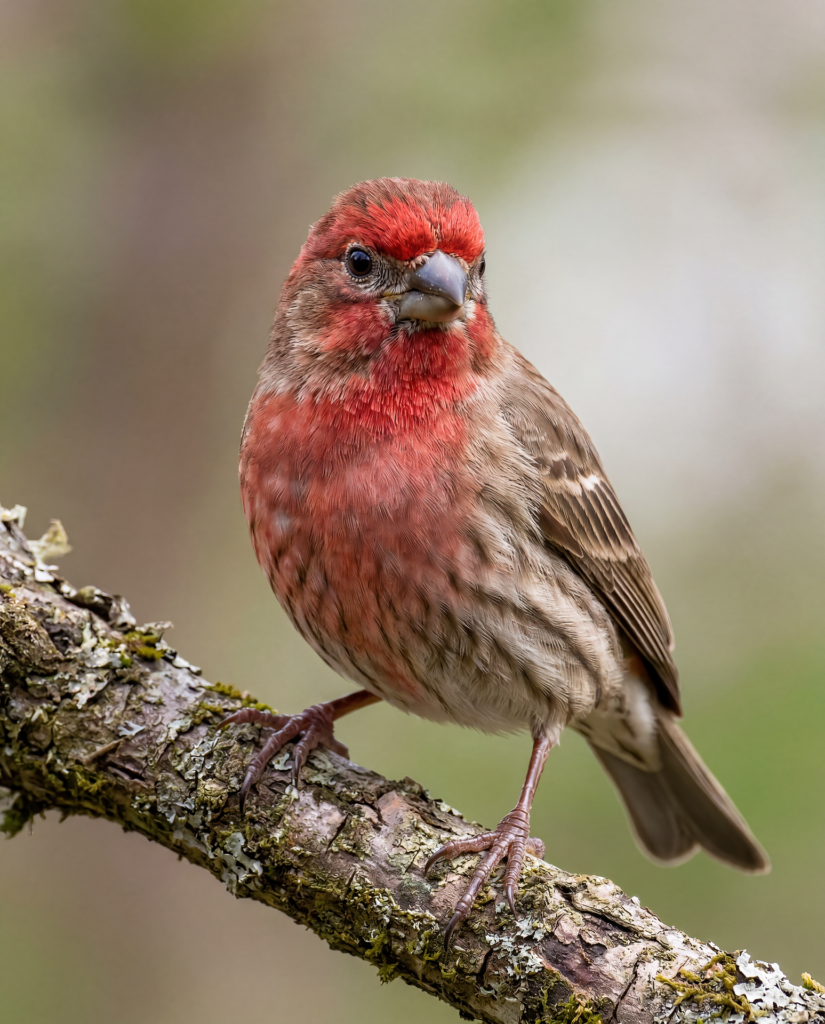
10. House Finch
Look for: Small finch with streaky brown females and males that range from yellow-orange to bright raspberry-red on the head, chest, and rump (color depends on diet).
You’ll see them: Year-round in nearly every Southern backyard with feeders. Often confused with purple finches (which are rare visitors south).
Favorite foods: Black oil sunflower seeds, sunflower hearts, nyjer seed. Easy to attract.
What About the Rare Beauties?
This list covers what you’ll see consistently. But part of the joy of Southern birding is the surprises:
- Painted buntings in Texas, Louisiana, and northern Florida — possibly the most beautiful bird in North America
- Indigo buntings during spring and summer
- Rose-breasted grosbeaks in spring migration
- Baltimore orioles if you put out orange halves
- Ruby-throated hummingbirds from spring through fall
We cover these specialty species in detail in other guides on this site.
The Two-Feeder Setup That Attracts All Ten
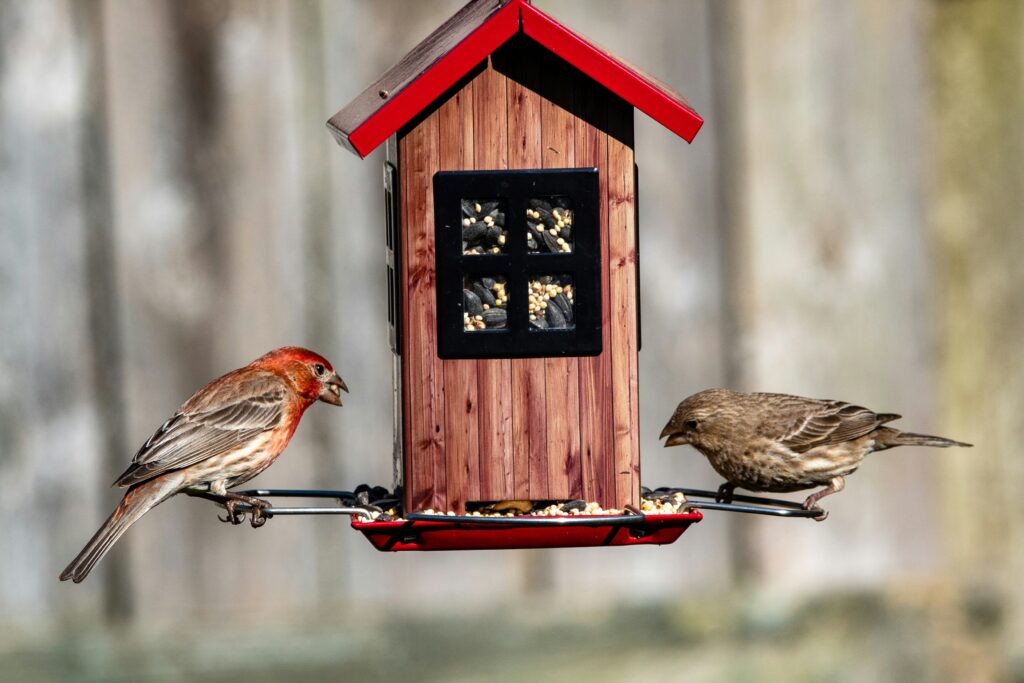
Want to see all ten of these birds in your yard? You don’t need a complicated setup. Two feeders cover the entire list:
- A tube feeder with black oil sunflower seeds—covers cardinals, chickadees, titmice, woodpeckers, jays, and finches
- A suet cage—covers wrens, mockingbirds, and woodpeckers
Add a ground area with millet for doves, and you’ve got the entire Southern songbird community visiting daily.
Start with these basics. Once you’ve got these ten species comfortable in your yard, you’ll start noticing the migrants, the rarities, and the seasonal visitors that make Deep South birding unforgettable.